With summers getting hotter and drier, we need to find ways of gardening more sustainably. This includes finding plants that can cope with dry conditions, so that there’s less need to spend precious water resources on watering the garden. We’ve listed six of our favourite drought-tolerant perennials, which prove that tough plants can still be beautiful!
Tips for Making a Drought-Tolerant Garden
Choosing drought-tolerant plants is just one of the ways you can help your garden cope with dry weather. Here are our top tips for drought-tolerant gardening.
- Mulch beds annually in autumn with a 5 cm (2 in) layer of compost, leaf mould, or well-rotted farmyard manure. This improves soil structure and helps soils retain moisture, reducing the need to water in dry periods.
- Water in the evening or early morning to reduce water loss through evaporation.
- Avoid watering little and often, as this encourages plant roots to stay shallow and more prone to drying out in hot weather. Instead, a thorough soaking every two to three days encourages the roots to grow deep in search of water, making the plant more prone to surviving periods of drought.
Drought-Tolerant Perennials
Many of our familiar garden plants originally come from hot, dry climates and are well adapted to cope with drought conditions. Here are six of our favourites:
-
Stachys byzantina is also known as Lamb’s Ears because of its furry silver leaves. The woolly covering reduces evaporation from the leaf surface, and this sturdy perennial makes a beautiful groundcover plant for a hot, sunny spot.
-
Sedums (Ice Plants), now renamed as Hylotelephiums, have fleshy leaves that store water, allowing them to thrive in dry conditions. Their flowers appear in mid and late summer and are very popular with pollinators.
-
Eryngium (Sea Holly) is a unique-looking perennial with spiny leaves and thistle-like flowers surrounded by spiky bracts. It’s fantastic for attracting bees, and the striking flowers also look great in dried flower arrangements.
-
Euphorbia (Spurge) are very drought tolerant once established, and with their distinctive form and colourful flowerheads, they make a significant impact on a sunny border. They contain a milky sap which can irritate the skin, so always wear gloves when working with them and avoid getting the liquid on your skin.
-
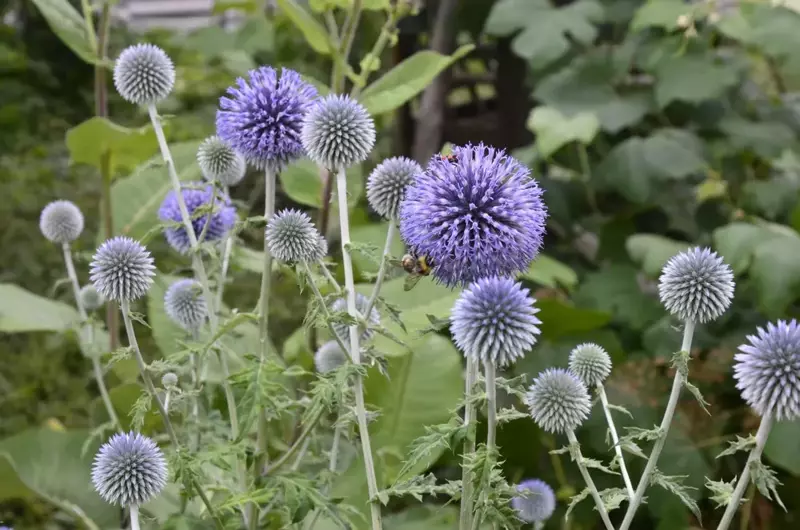
Echinops (Globe Thistle) is an excellent choice for a pollinator-friendly garden, as bees love the spiky round blue flowers on their tall stems. With their unique form, the flowers are also ideal for cutting.
-
Achillea (Yarrow) is instantly recognisable, with its flattened flowerheads and feathery foliage. Achilleas are available in a wide range of stunning colours that look great on any sunny border, and these drought-tolerant perennials do best in well-drained soil.
Whatever your garden needs, you’ll find it in our centre, so visit us soon to see what we have in store!